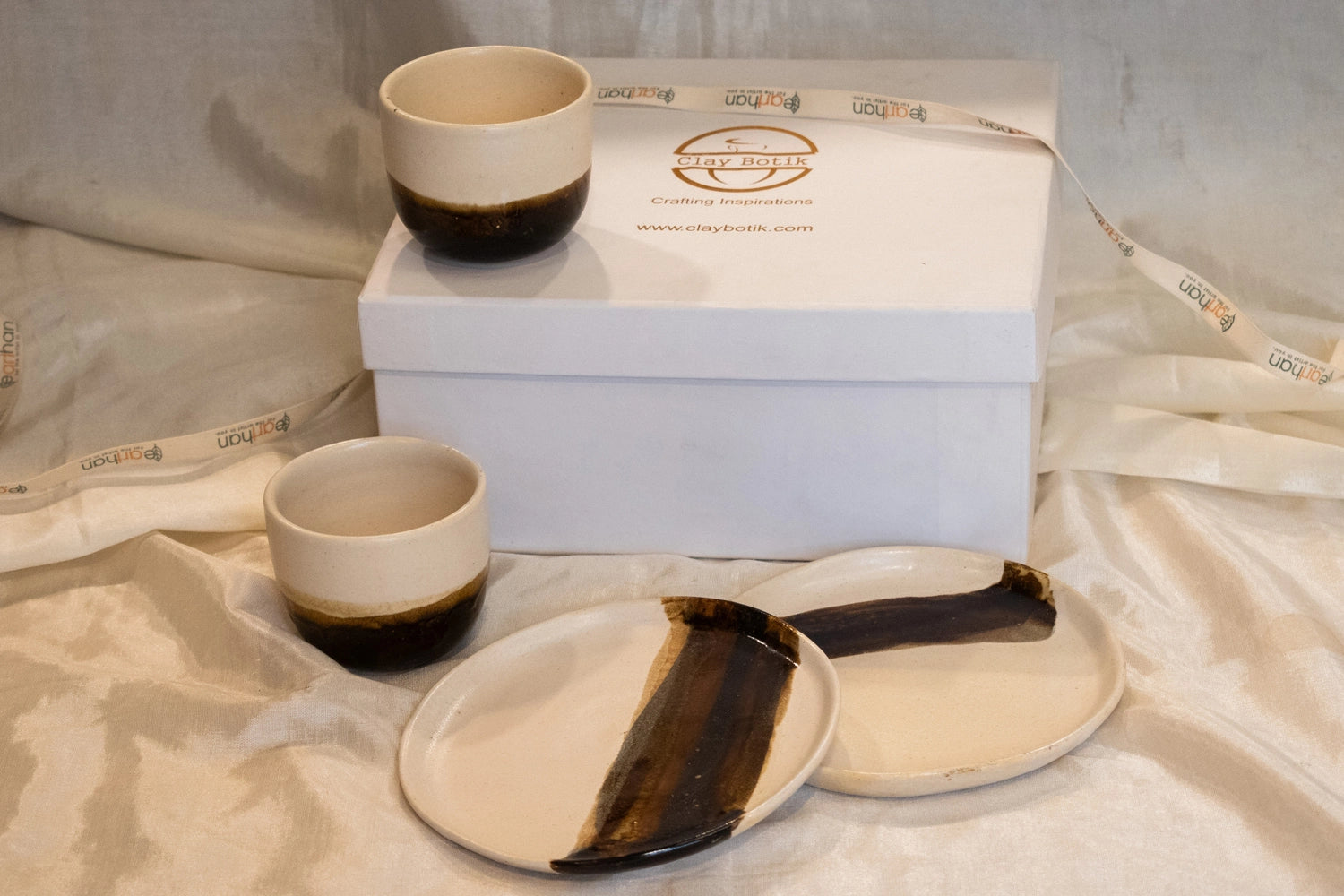

A ceramic mug is one of those objects you reach for before your eyes are fully open. It holds your first coffee, your afternoon chai, your late-night chamomile. It is handled more than almost any other object in your home; this means choosing the right one actually matters.
But walk into any home decor store (or scroll through any website), and the options are overwhelming: stoneware mugs, pottery mugs, handmade coffee mugs, porcelain cups, ceramic sets. How do you know which one will feel right in your hand, keep your coffee hot, and still look good five years from now?
At Earthan, we have been making handmade ceramic mugs in Jaipur for years. Here is everything we have learned, distilled into a guide that will help you choose well.
What type of ceramic is best for a daily-use mug?
Not all ceramics are equal. The type of clay and the firing temperature determine how durable, heavy, and heat-retentive a mug will be. Here is how the main types compare:
Comparison: Ceramic mug types
|
Feature |
Stoneware (Earthan) |
Earthenware |
Porcelain |
|
Firing Temp |
1250–1280°C |
900–1150°C |
1260–1400°C |
|
Durability |
High |
Medium |
Medium–High |
|
Heat Retention |
Excellent |
Good |
Fair–Good |
|
Weight |
Substantial |
Light |
Very light |
|
Dishwasher Safe |
Yes |
Usually not |
Yes |
|
Artisan Feel |
Strong |
Moderate |
Minimal |
For daily use, stoneware is the clear winner. It is the material used in all Earthan handmade coffee mugs. It is fired at 1250–1280°C, vitrified (non-porous), dishwasher-safe, and built to survive the kind of daily handling most pottery cannot manage.
Earthan note: Our mugs are thrown on a potter’s wheel in Jaipur using stoneware clay sourced from Rajasthan. Each piece is fired twice: a bisque fire at 900°C, then a glaze fire at 1260°C.
What size ceramic mug should I choose?
Mug size is the most personal choice, and it depends entirely on how you drink:
• 200–250ml: Espresso, short black, ristretto. Also ideal for matcha or green tea where you want the drink to stay hot quickly and be consumed fast.
• 300ml: The goldilocks size. Works for a standard pour of filter coffee, chai, or tea. This is our most popular size at Earthan.
• 350–400ml: For those who make a large flat white, a long black, or anyone who likes a generous mug of herbal tea.
• 450ml and above: Breakfast mugs. Great for slow mornings. Heavy to hold when full, but satisfying for the long haul.
If you are buying for gifting and do not know the recipient’s preference, a 300ml mug is the safest choice. It is the size most people drink from most of the time.
Does wall thickness affect heat retention?
Yes, significantly. This is the detail most mug guides skip, but it is one of the most practical.
Thicker walls (4–6mm) insulate better and keep drinks hotter longer. Earthan’s standard handmade mugs have a wall thickness of approximately 5–6mm, which means a coffee poured at 85°C stays drinkable for 20–25 minutes longer than in a thin commercial mug.
Thinner-walled mugs (2–3mm) heat up faster and cool down faster; they are better for delicate teas where you want to taste the tea, not the heat.
Quick test: Hold an empty mug and press your thumb against the outside wall. If you can feel the warmth of your other hand through the clay, the walls are thin. Earthan mugs should feel like a slight barrier; that is the insulation at work.
What is the difference between matte and glossy glazes?
Glaze is the glass-like coating that makes ceramic food-safe, non-porous, and visually finished. The two main finishes are matte and glossy:
Matte glaze
• Softer, more tactile surface that feels warmer in the hand
• Shows fingerprints more readily
• Slightly more porous surface than glossy (but still food-safe when properly fired)
• Best for people who value the handmade aesthetic and warm tactile feel
Glossy glaze
• Smooth, reflective surface that is easier to clean
• Colour appears more vivid and saturated
• More resistant to staining from coffee or tea
• Best for everyday coffee drinkers who want easy maintenance
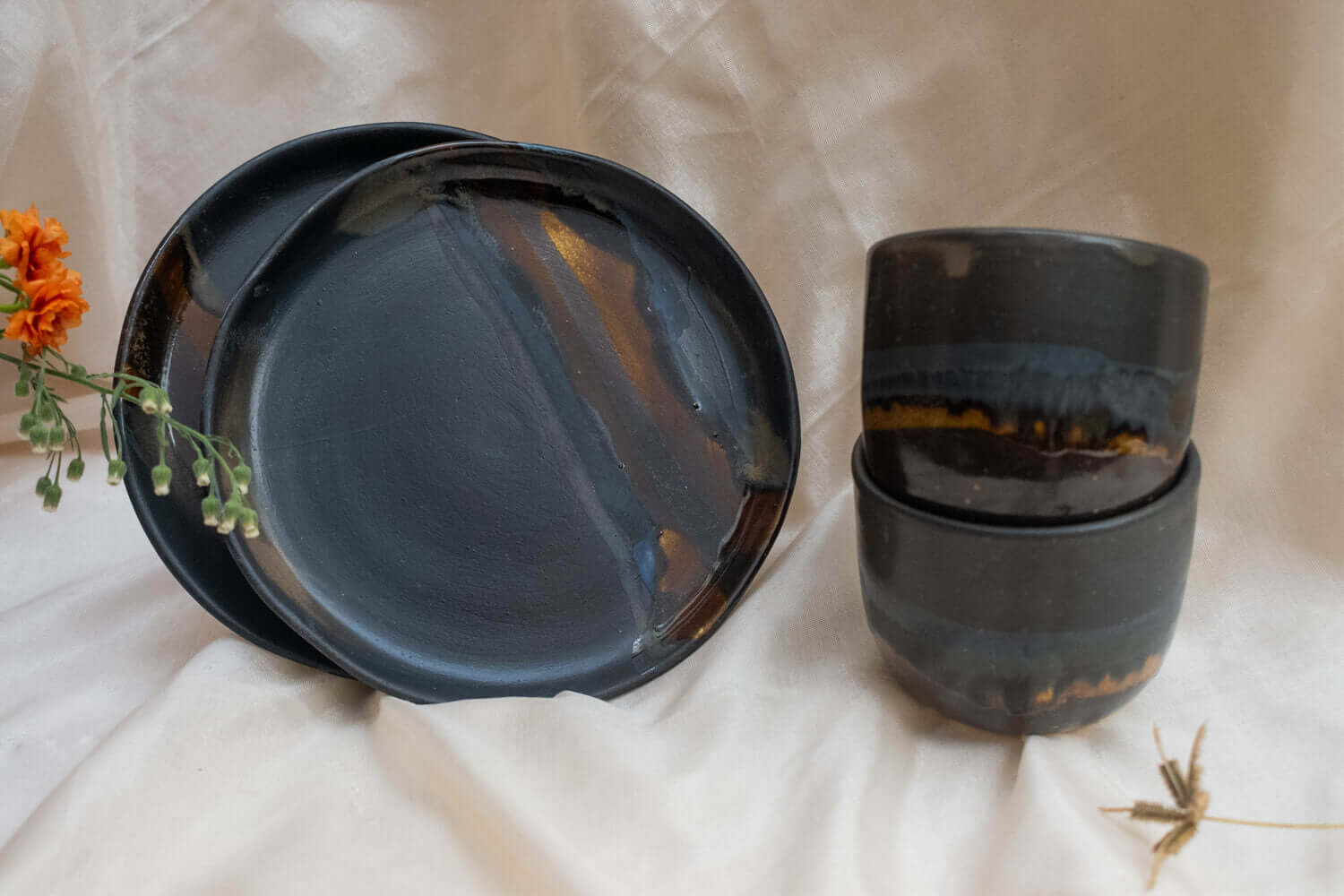
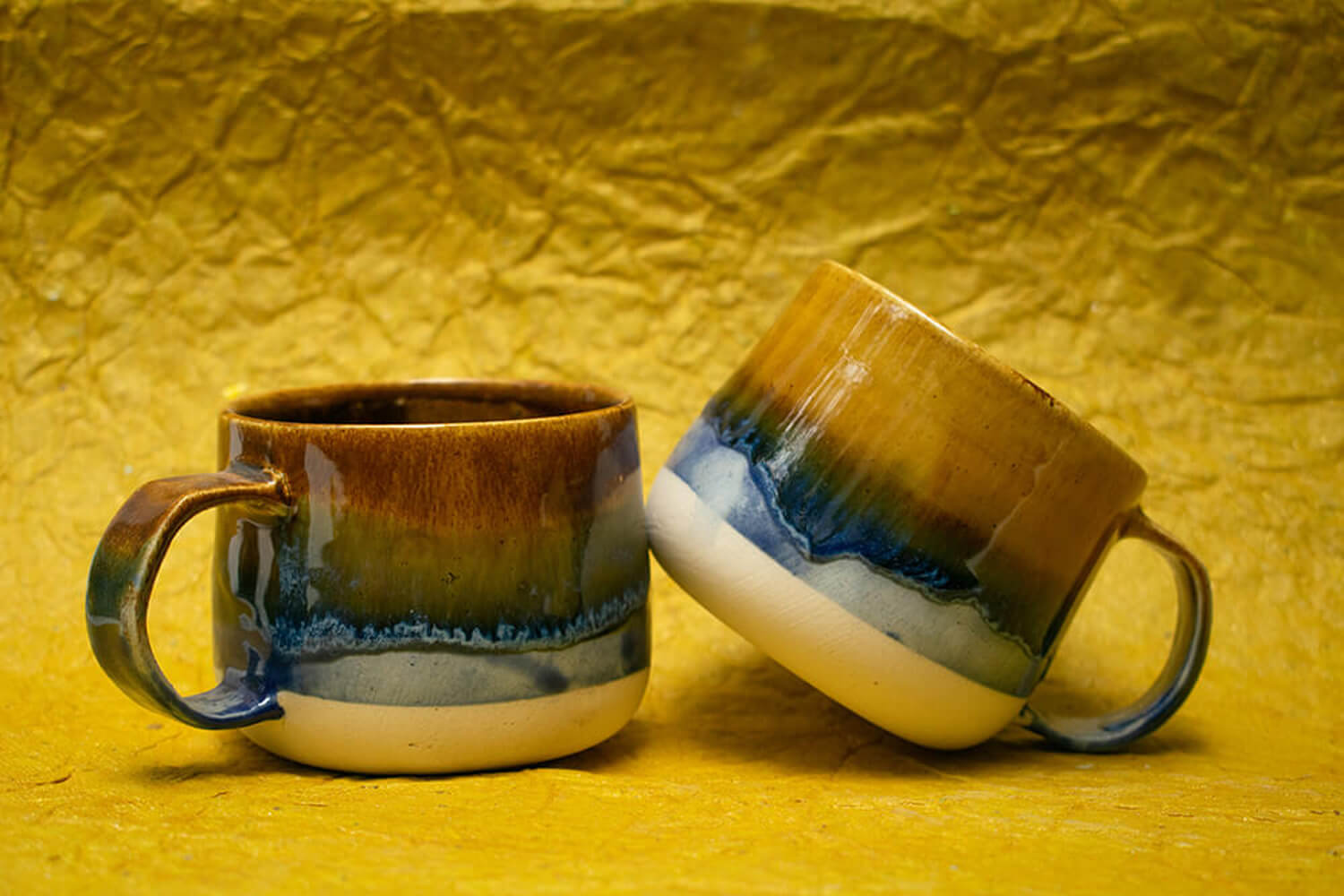
Most of Earthan’s unique handmade coffee mugs use a semi-matte or satin glaze, a middle ground that gives the warmth of a matte finish with the ease of a glossy one.
How do I know if a handmade mug is food-safe?
This is the most common question we get, and a legitimate one. Here is what makes a ceramic mug food-safe:
• Lead-free glaze: all reputable ceramic studios test for this. All Earthan glazes are lead-free.
• Fully fired glaze: under-fired glazes can leach chemicals. Our mugs are fired to maturity at 1260°C, which fully vitrifies the clay body and matures the glaze.
• No raw clay on the interior: the inside of a food-safe mug should be completely glazed. Unglazed interiors can harbour bacteria.
• Microwave-safe: if a glaze contains metallic pigments (gold, platinum), it may not be microwave-safe. Earthan’s standard range is microwave-safe; mugs with metallic accents are labelled separately.
Earthan guarantee: Every batch of glaze we use is lead-free and food-safe. Our mugs, bowls, plates, and tea cup sets are dishwasher-safe and microwave-safe unless stated otherwise.
Why do handmade ceramic mugs look slightly different from each other?
Because they are made by a person, on a wheel, by hand. When you buy a handmade coffee mug from Earthan, you are buying something that was shaped, carved, glazed, and fired individually. No two wheel-thrown mugs are identical.
You might notice:
• Slight variation in height or width between mugs in the same set
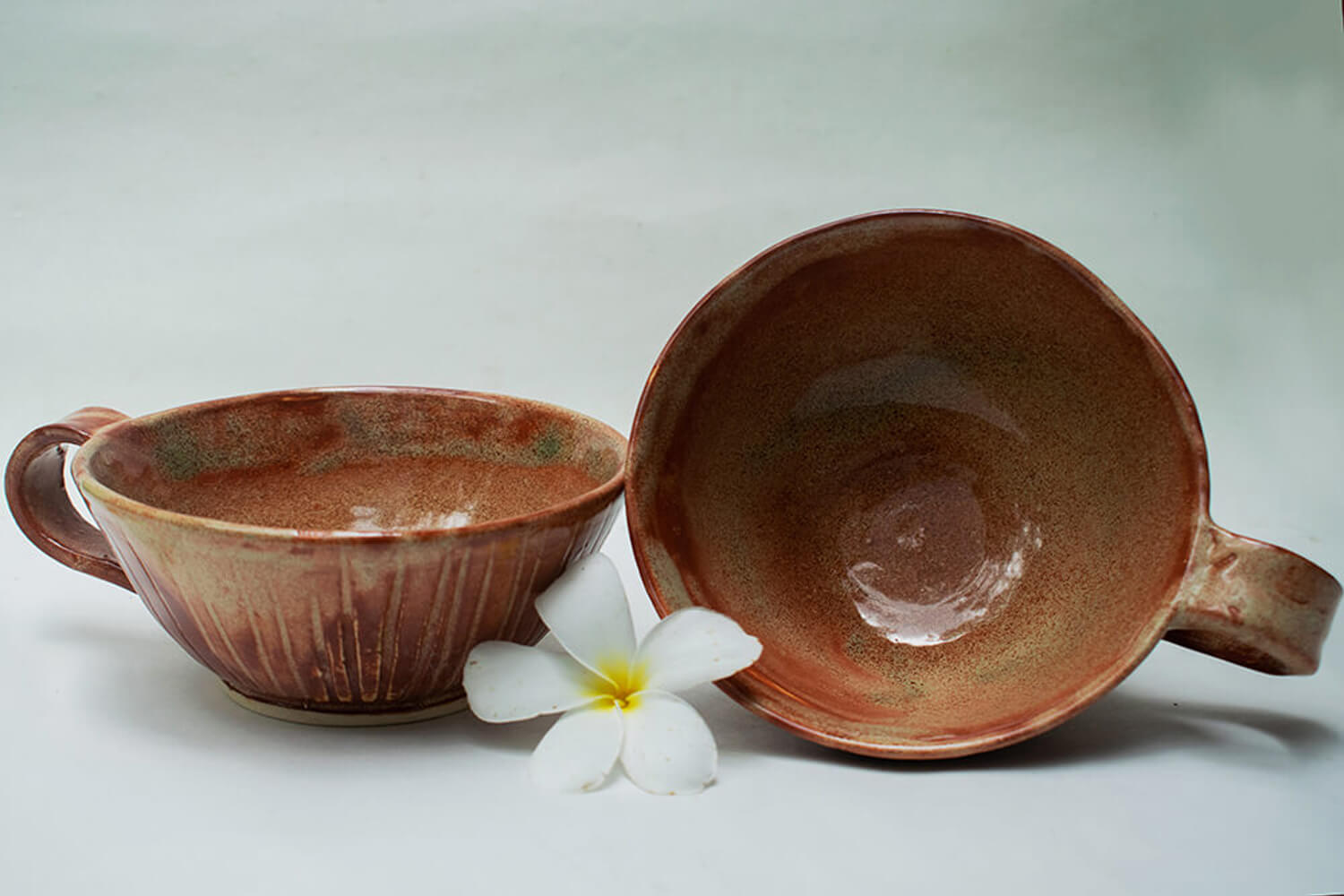
• Glaze colour shifts; one side slightly more amber, the other more terracotta
• Gentle asymmetry in the rim or handle attachment
These are not defects; they are the marks of a human hand, and the reason handmade ceramics hold their value and meaning in ways that factory pieces never will.
Frequently Asked Questions (FAQs)
Are ceramic mugs better than glass or plastic?
Yes, for hot drinks. Ceramic insulates better than glass and is far safer than plastic (no chemical leaching). Stoneware ceramic mugs retain heat 2–3x longer than glass mugs of the same size.
Can I put a handmade ceramic mug in the dishwasher?
Yes. Earthan stoneware mugs are dishwasher-safe. For mugs with gold or metallic accents, hand washing is recommended to preserve the finish.
What is the best pottery mug for coffee?
A 300ml stoneware mug with 5–6mm walls and a comfortable handle width. Stoneware holds heat better than earthenware pottery, and the thicker walls keep your coffee warmer for longer.
Why are handmade coffee mugs more expensive?
Each mug takes 30–60 minutes of skilled artisan time across throwing, trimming, glazing, and two firings. The higher price reflects real labour, not brand markup. A good handmade mug also lasts years longer than a cheap factory mug.
Browse Earthan’s Handmade Ceramic Mugs → earthan.in/collections/ceramic-coffee-mugs
You might also like:
– Ceramic Tea Cup Sets: earthan.in/collections/ceramic-tea-cup-set
– Ceramic Bowls: earthan.in/collections/ceramic-bowls
– The full Ceramic Homeware Collection: earthan.in/collections/ceramic-tableware